Public, four-year institutions award some 67% of all master’s degrees. The nation’s 520 regional public universities (RPUs) comprise the vast majority (86%) of such public institutions. Despite their share of the higher education landscape, RPUs tend to receive little fanfare in the higher education world, particularly compared to R1 research universities and elite private schools. RPUs fulfill their missions humbly and effectively, and the truth is that these institutions are quietly keeping the doors to postsecondary education open for millions of students who otherwise wouldn’t have access. At a moment when many states are grappling with declining higher education enrollments and workforce shortages, these institutions deserve far more recognition and public support than they get.
What are regional public universities?
While everyone intuitively recognizes these regionally focused institutions, it’s worth breaking down what differentiates them from other public universities. RPUs tend to focus more on impact than prestige and are heavily focused on delivering equitable access to higher education. They typically are teaching-centered institutions, and their faculty are evaluated more on the quality of instruction than their research output. And, these institutions tend to have meaningful partnerships with area employers, school districts, and governments, making them educational powerhouses in their respective regions.
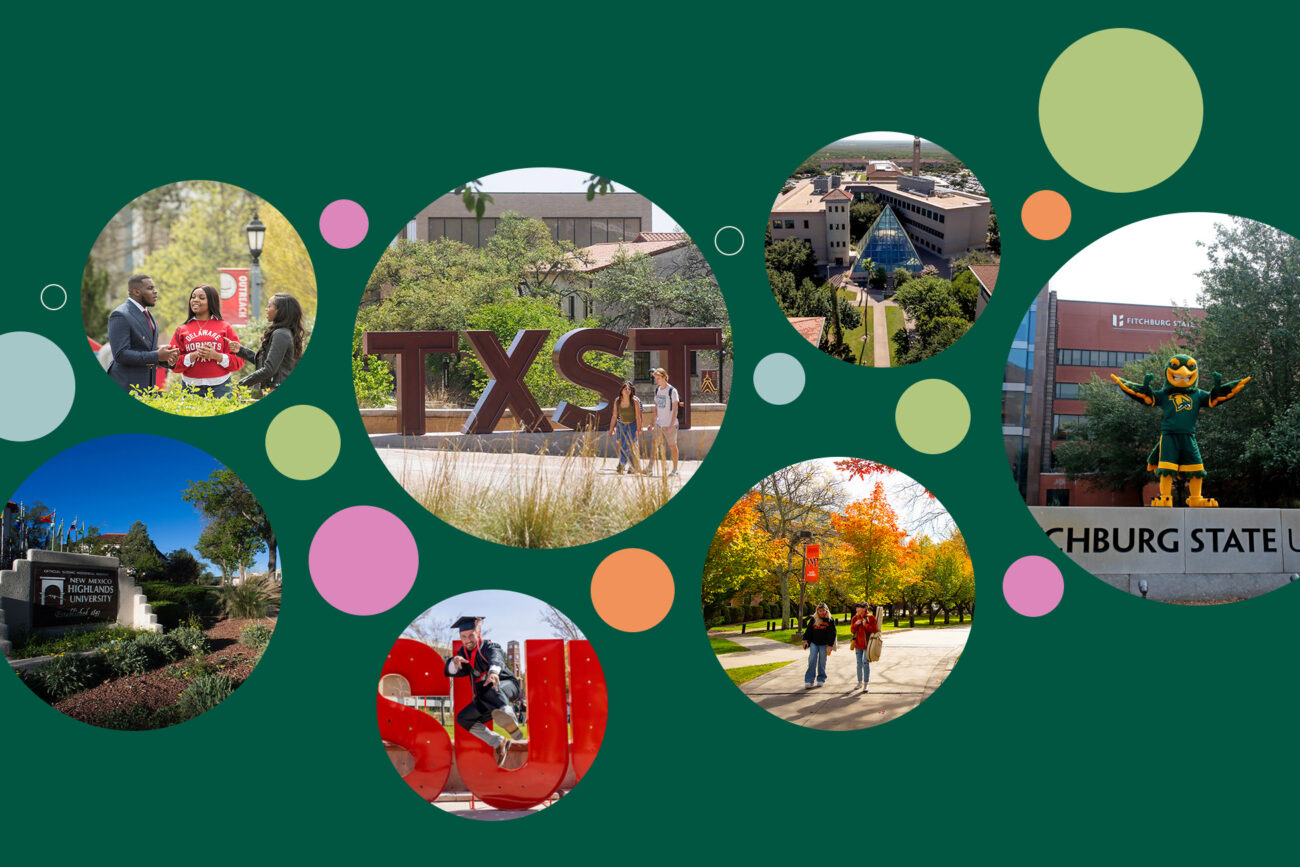
Third Way explains that there are five types of RPUs: regionally-focused Historically Black Colleges and Universities (HBCUs), like Delaware State University or Norfolk State University; accessible, mid-sized, master’s-granting institutions, like Eastern Washington University; rural serving institutions, like Fitchburg State University or Southern Utah University; large, urban, regional-serving Minority Serving Institutions (MSIs), like New Mexico Highlands University; and regionally-focused Hispanic Serving Institutions (HSIs), like William Paterson University, University of Mount Saint Vincent, Texas A&M International University, or Texas State University.
A study in social mobility
The impact on social mobility afforded by RPUs is most noticeable for students of color, rural students, adult learners, and veterans — many of whom gravitate towards regional master’s programs because of the strong balance of quality, flexibility, and affordability they offer.
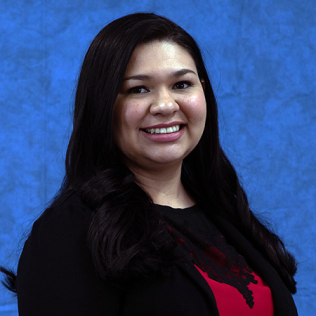
“With my degree, I was able to become more confident in myself. That got me to this manager position I am in now. I love being able to reach out to the kids in my community and let them know that you can be proud to be First American. You can be proud to be Chickasaw.”
Lori White Buffalo, graduate of Southeastern Oklahoma State University
For many students, these institutions don’t just break barriers to higher education, but they also mitigate financial and personal risk. The mere presence of RPUs is known as a positive catalyst for communities.
Third Way reports, for example, that children who live near an RPU experience stronger economic and social outcomes than those living in regions without them. People who grow up in a county that is home to a regional university also experience lower rates of incarceration and are more likely to be employed and married. Importantly, these institutions give prospective students the opportunity to pursue advanced credentials without needing to put themselves in financial peril or uproot their lives and families.
RPUs bring communities education that powers industry
Graduate degree programs at RPUs, like those offered by Risepoint partner institutions, are tightly aligned to the needs of local industry and workforce. These institutions tend to function as de facto pipelines of highly skilled and educated workers, serving up in-demand talent to those employers and sectors that need it most in any given region.
This is particularly important in mission-critical professions where worker shortages can have immediate and devastating consequences for communities. For example, teaching and nursing are both licensure-based occupations that can’t be outsourced, but that are facing dire staffing shortages. In nursing alone, a shortage of nearly 80,000 registered nurses is said to exist. RPUs ensure that a fresh pool of nursing and teaching talent will effectively always be available to power the schools, hospitals, and care homes in a region.
RPUs have wide geographical range
With their undeniable regional economic value, RPUs can effectively support students in a wide circumference around their campus. With flexible, online offerings, RPU graduate programs rise to the challenge of serving place-bound learners with a version of flexible, ‘learn anywhere’ education that gives them the best path to success, at scale. In the Voice of the Online Learner report, we found that 60% of online students live within 100 miles of the school where they’re enrolled or plan to enroll, and 76% live and or work in the same state as their institution.


“The online MBA and MSEd degrees that we offer in partnership with Risepoint have increased our ability to be more nimble and flexible with adult learners. The majority of our online students are place-bound Oregonians who would otherwise have to look out of state for an advanced degree.”
Dr. Susan Walsh, retired Provost and Vice President for Academic Affairs at Southern Oregon University
The story of RPUs is one of quiet, but powerful impact. These indispensable institutions not only serve as anchors for local economies, but they also expand access to graduate education for millions of people, creating pathways to opportunity that other forms of higher education too often overlook. With an emphasis on teaching and workforce alignment, RPUs offer a version of higher education that is laser-focused on real-world outcomes.

“Regional public universities build the talented workforce that keeps this country moving. Nursing, education, counseling, public safety, and other fields essential to our economy and community well-being are their great expertise.”
Charles Welch, President and CEO of the American Association of State Colleges and Universities (AASCU)
Hear from learners, educators, and administrators at the regional public universities that we support in our Impact Report.