As business schools navigate mounting enrollment pressures and increased competition, online education continues to represent one of the most significant opportunities for growth. However, expanding access alone is no longer sufficient. Today’s online business learners across the United States, United Kingdom, and Australia are entering programs with increasingly aligned expectations that are reshaping the future of business education.
In the latest Voice of the Online Learner, Risepoint surveyed more than 1,500 business learners globally to better understand how their motivations, preferences, and expectations are evolving. What emerges is not a fragmented global market, but a converging one where shared priorities are redefining what institutions must deliver to remain competitive.
The profile of the modern online business learner
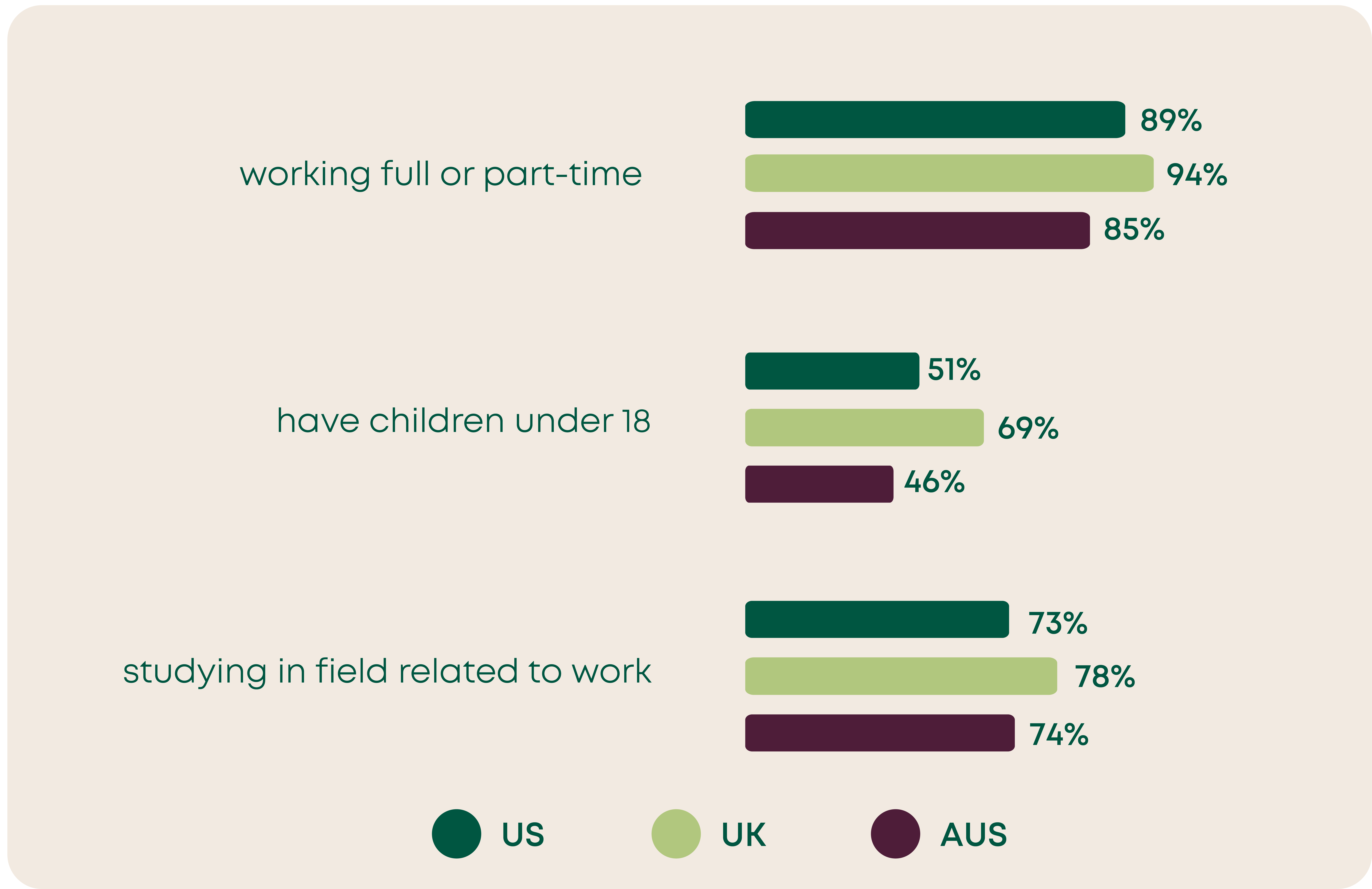
Across all three markets, online business learners share a remarkably consistent profile. They are working adults balancing professional, academic, and personal responsibilities.
The vast majority are employed, often full-time, while many are also managing family obligations, including caring for children. In addition, a meaningful portion are first-generation college students, reinforcing the role of online education in expanding access.
These learners are highly intentional. Most are studying in fields directly related to their current roles, signaling a strong connection between education and career progression.
Career outcomes are the primary enrollment driver
Across all markets, career advancement is the dominant motivation for pursuing an online business degree. The vast majority of learners cite career-related outcomes such as promotion, skill development, and increased earning potential as their primary reason for enrollment.
Learners are not only motivated by these outcomes; they expect to achieve them. Most believe their degree will play a critical role in reaching their professional goals, and many already report measurable career impact.
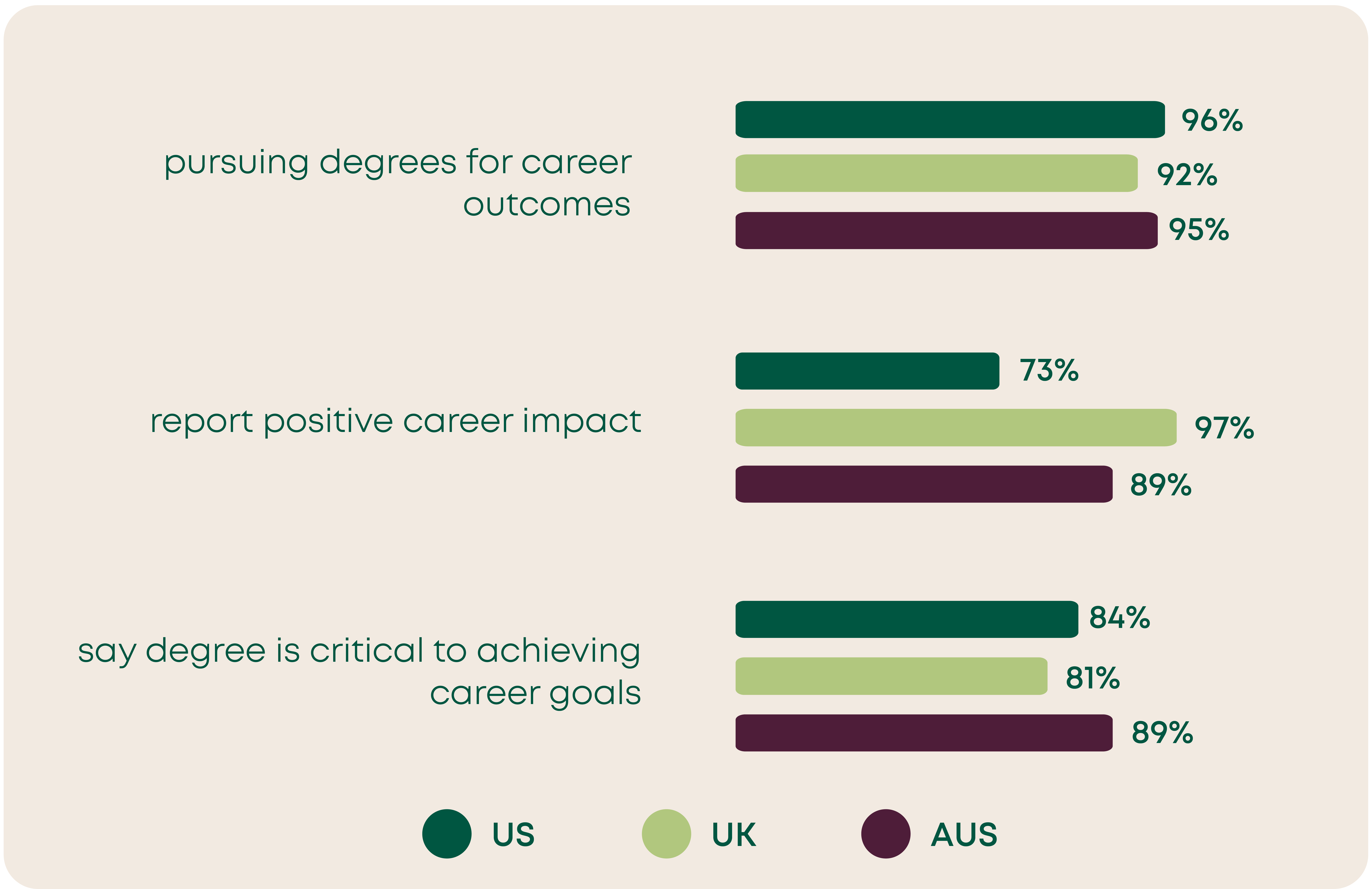
This raises the bar for institutions. Clearly demonstrating return on investment is no longer optional. Outcomes must be visible, credible, and tied directly to career advancement.
Flexibility as a baseline, connection as a differentiator
Flexibility remains essential for online learners, but it is no longer a differentiator. Increasingly, learners are seeking connection with instructors and peers as part of their educational experience.
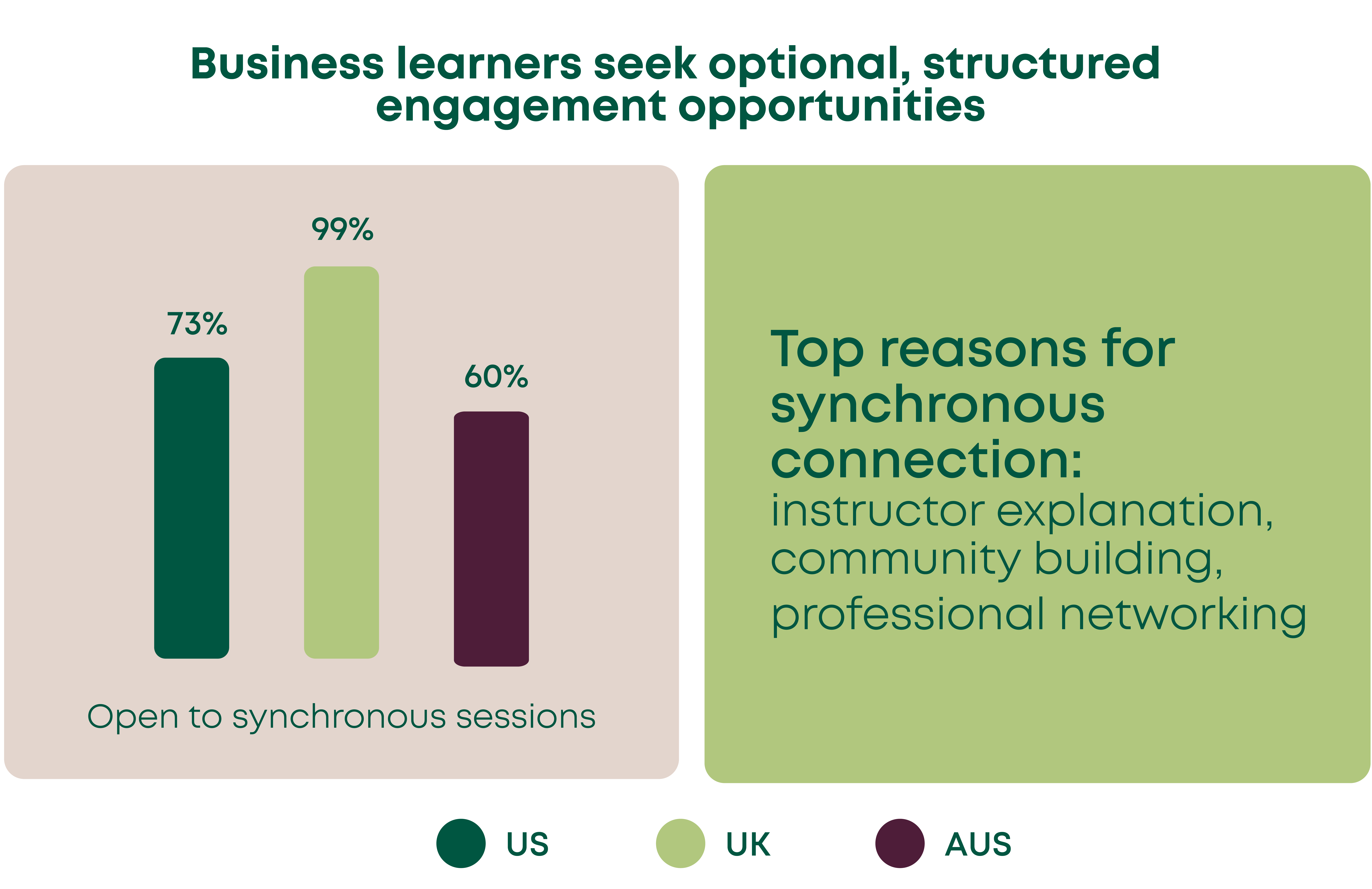
Across markets, a strong majority expresses openness to incorporating synchronous elements into their programs. Interest is particularly high in the UK but remains significant across all regions.
Learners consistently cite similar reasons for this preference, including the ability to better understand complex material, build relationships, and expand professional networks.
The implication is clear. Leading programs will be those that integrate structured opportunities for engagement; however, these opportunities should be optional to maintain the flexibility learners require most.
The growing expectation for AI integration
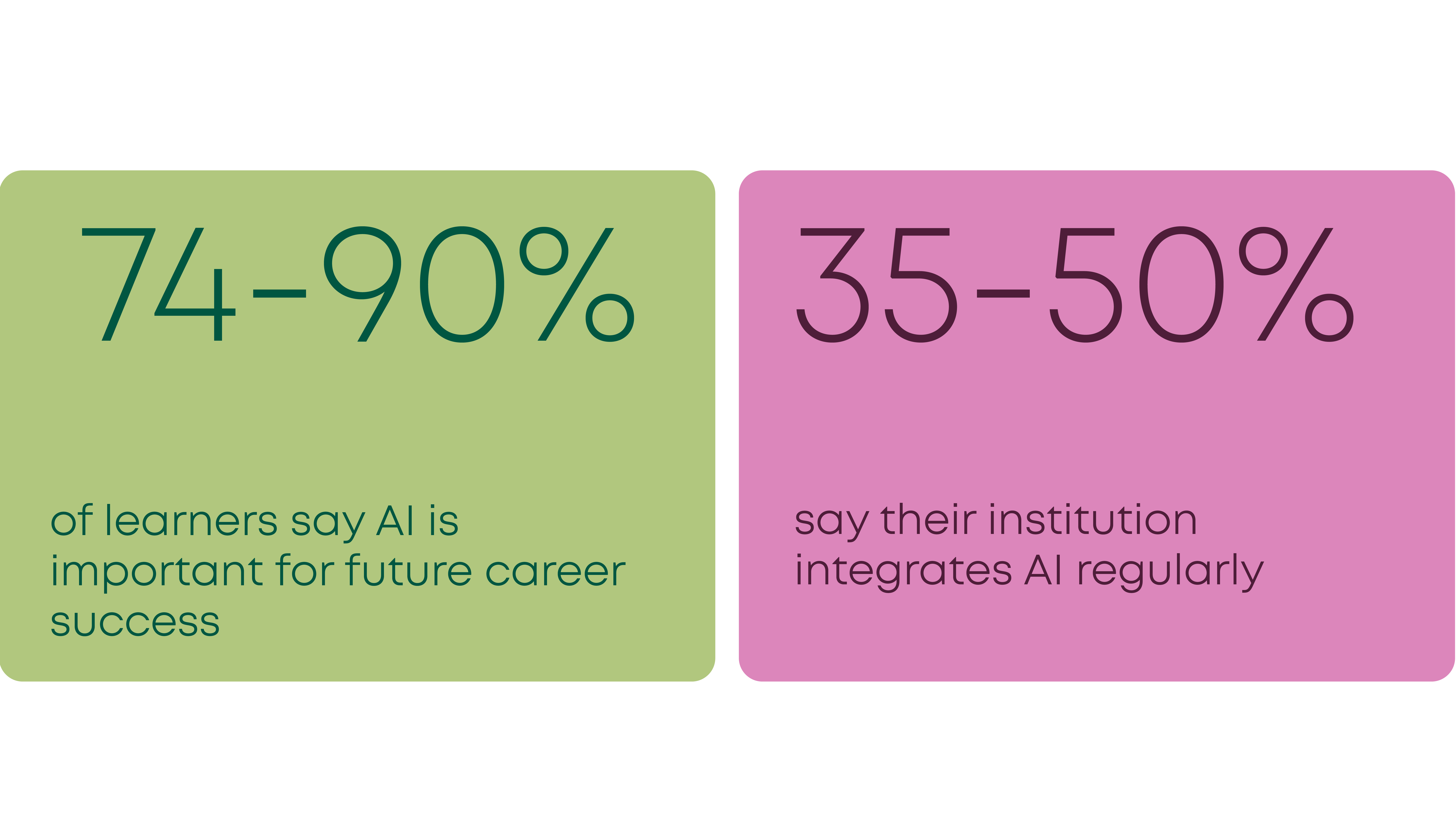
As Gen AI becomes more embedded in the workplace, learners expect their education to evolve alongside it. Across all markets, there is strong agreement that AI will play a critical role in future career success.
However, there is a clear gap between expectation and experience. Many learners report that their programs do not consistently integrate AI tools or instruction.
Learners are looking for more than exposure. They want structured guidance on responsible use, clear policies, and practical applications that connect directly to workplace scenarios.
For business schools, this represents an opportunity to differentiate by embedding AI in ways that are intentional, applied, and aligned with employer needs.
The rise of alternative credentials and stackable pathways
Interest in alternative credentials is growing across all markets, reflecting a shift toward more flexible and career-aligned learning pathways that help workers keep up with the quickly evolving advances in technology and AI.
Learners are increasingly open to non-degree options, particularly when those options provide immediate workplace value. Industry certifications and short-form credentials are especially appealing.
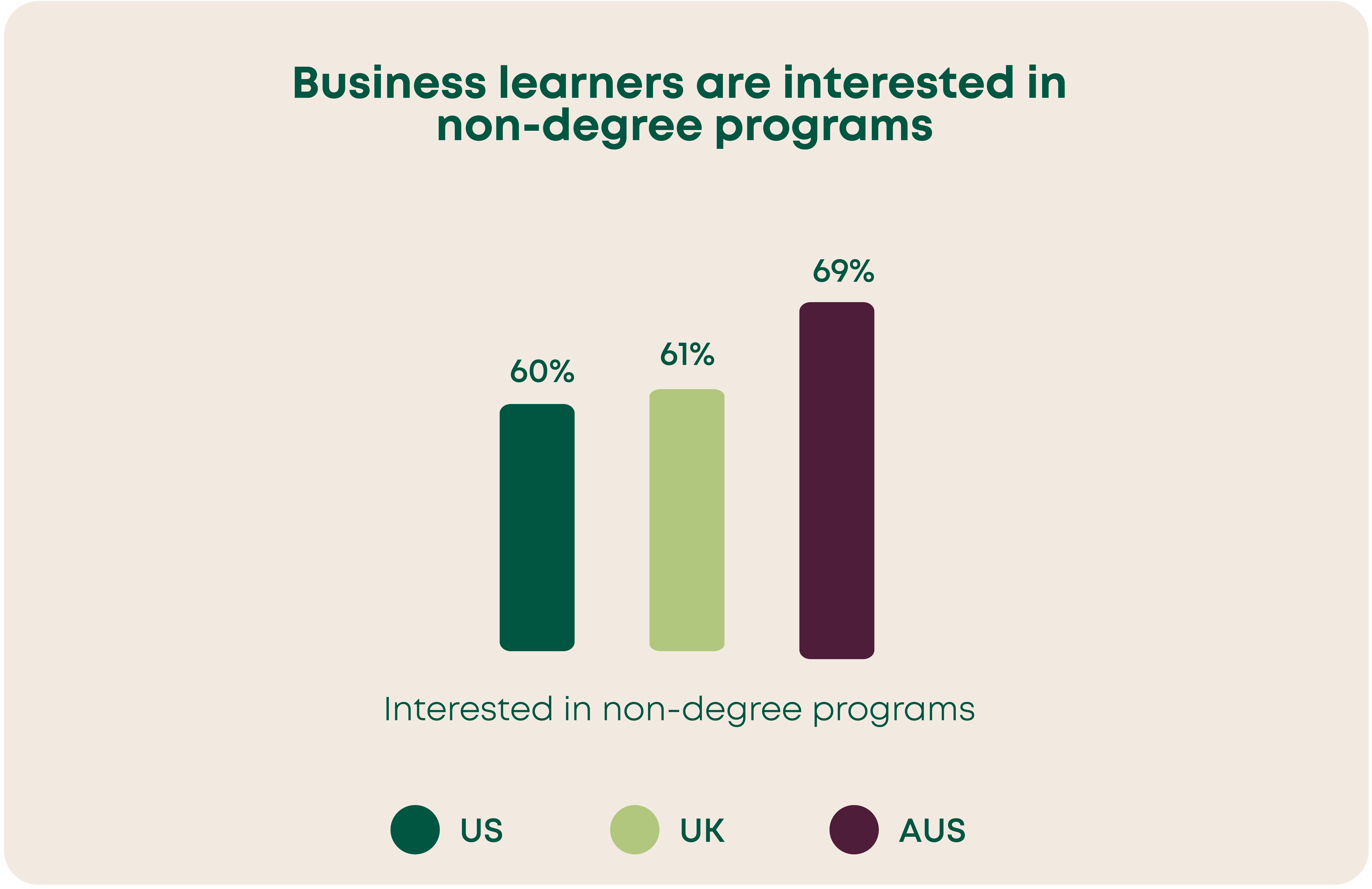
At the same time, a lack of clarity around how these credentials connect to a full degree remains a barrier. Despite slight differences in how this question was asked across each study/audience, the conclusion was consistent: many learners indicate that clearer pathways would significantly increase their interest, especially in Australia.
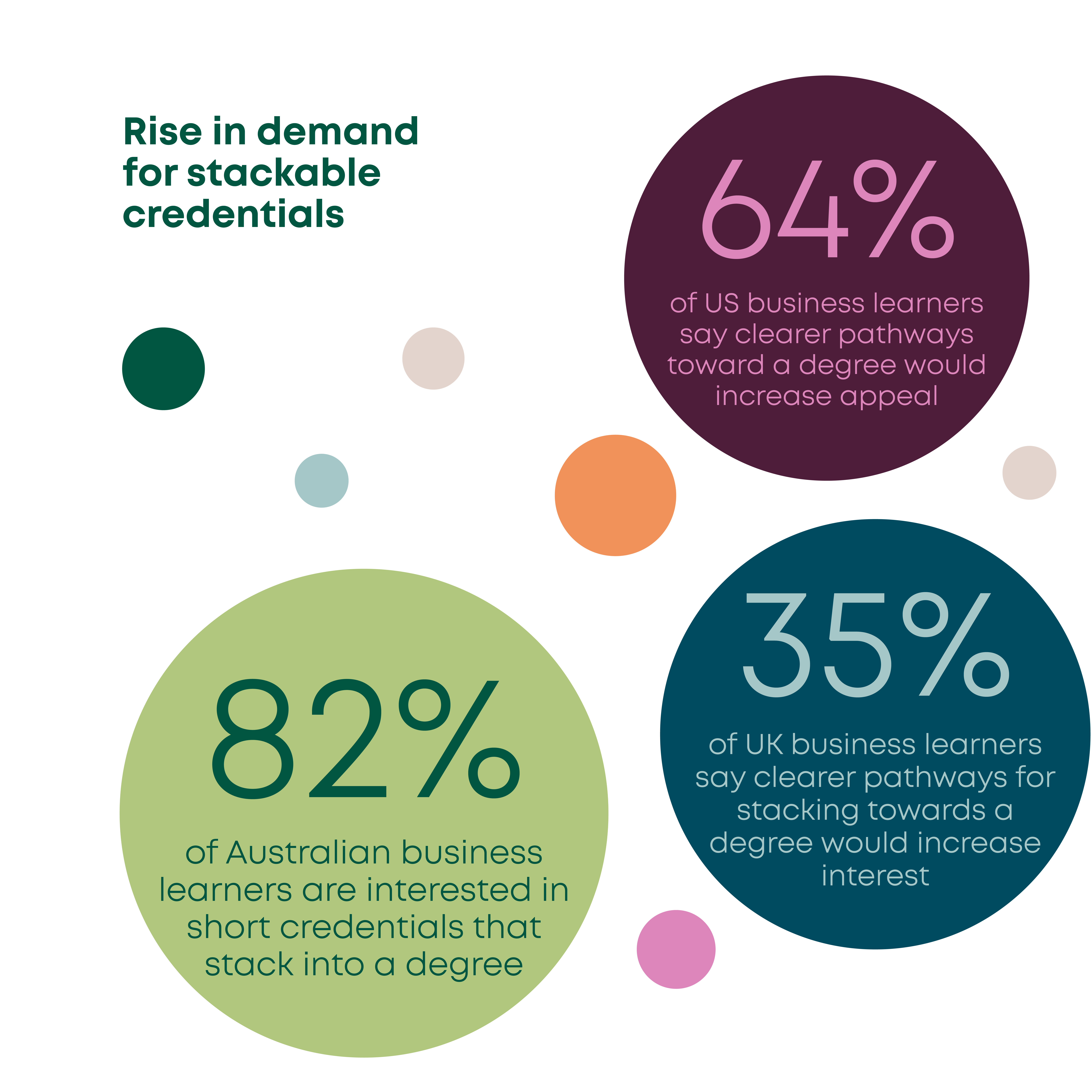
This interest signals the emergence of a more modular model of education, where learners move between short-form learning and full degrees based on career needs and life circumstances.
Implications for business schools
Taken together, these findings point to a set of globally consistent expectations that are reshaping online business education.
- Clear career outcomes are central to decision-making.
- Flexibility must be complemented by meaningful opportunities for connection.
- AI literacy is becoming a core expectation rather than a differentiator.
- Stackable and career-connected pathways are gaining traction as learners seek more adaptable educational journeys.
While these trends are global, their application is local. Institutions must interpret these expectations within their own strategic context while ensuring they remain aligned with the evolving needs of adult learners.
Continue your research
To explore these findings in greater depth, including additional insights specific to the U.S. market, download the 2026 Voice of the Online Learner: Business Edition.
Meet the author:

Kerry Scott Pokorny, Vice President of Research & Insights at Risepoint
Kerry Scott Pokorny is the Vice President of Research & Insights at Risepoint, where she leads efforts to uncover what today’s adult learner needs and how universities can better serve them. With over 20 years of experience in strategy, marketing, and customer insights, Kerry brings a deeply analytical perspective to the higher education landscape.