The enrollment cliff has gone from a future prospect to an operational reality for higher education leaders. Graduate programs, and those at regional public universities (RPUs) in particular, are facing a unique set of challenges related to the decline in student numbers. The silver lining? A once-in-a-generation opportunity to future-proof the shape of graduate education — from who it serves to how it’s delivered, and everything in between.
What is the enrollment cliff?
If you’ve worked in or around higher education for any length of time, you’ll be quite familiar with the phenomenon. If you aren’t, it entered the sector’s vernacular around 2010, when a declining birth rate and the effects of the 2008 recession began to exert a gravitational pull on higher education’s student numbers — drawing institutions ever-closer to something now widely known as the enrollment cliff.
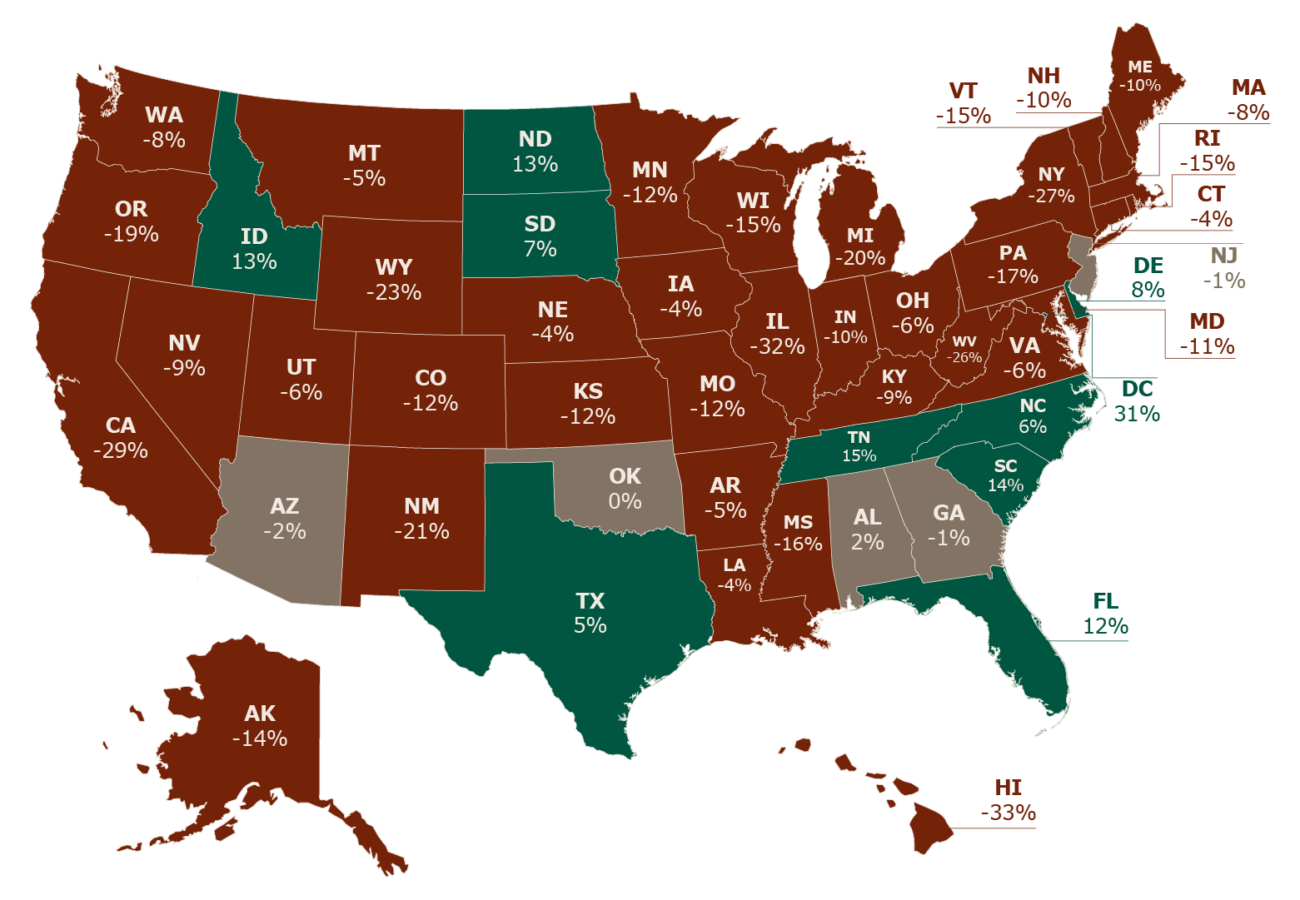
Across higher education, the impacts are uneven. RPUs have been uniquely exposed to the risks of dwindling enrollments. The long-standing geographic dependence of many RPUs means they have historically drawn the majority of their enrollments from a small regional pool, with fewer alternative pipelines to offset temporary declines. This type of exposure to enrollment declines doesn’t just impact institutions and the bottom line. It impacts the populations of geographical regions, and at scale, entire sectors of the economy.
Take nursing, for example. Many hospital systems rely heavily on the graduate programs of RPUs, which are typically heavily focused on workforce-specific education, to provide and sustain a pipeline of qualified healthcare workers — a pipeline that keeps hospitals staffed and communities in good health. A year-on-year drop in nursing students at just one RPU can mean a shortage of newly qualified nurses and medical staff, causing local hospital systems to have to fill gaps in more costly ways.
Yet, flipping that narrative, RPU’s are also uniquely positioned to overcome the enrollment cliff in a way that other higher education providers aren’t.
Forward-thinking RPUs are taking a multi-pronged approach to keeping enrollments up. They are pursuing multiple revenue diversification efforts simultaneously, in acknowledgement that the enrollment cliff isn’t a temporary glitch — it’s a long-term demographic shift that will impact higher education for the foreseeable future.
RPUs are leaning into flexibility and data to fight the cliff
A willingness to be flexible is the RPU’s greatest strength and what sets it apart from other college systems. What does that flexibility look like?
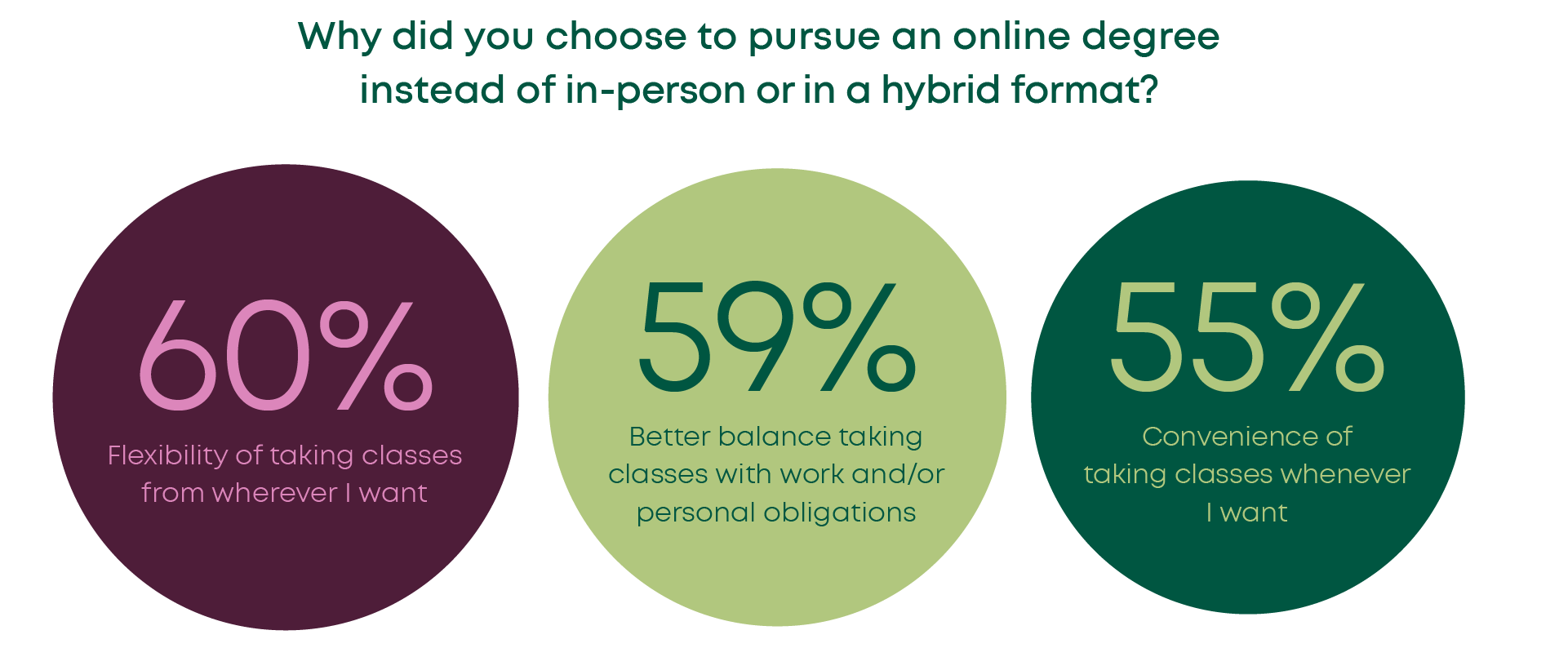
Online learning gives RPUs the power to shatter regional dependency. Of course, many RPU leaders are no strangers to online learning. They know that online graduate courses are not only highly effective at preparing emerging professionals to fill jobs thanks to the efficacy of their work-based learning focus, but they are also highly scalable. The scalability and diversity of online programming is key not only to sustaining numbers, but also to ensuring growth. Forward-thinking RPUS are further diversifying their programming by launching fully or partially online master’s degrees and are now also offering graduate certificates and stackable credentials.
RPU’s are also recruiting far beyond their historical geographic footprint and using smart marketing to ensure that working professionals everywhere see the value in continuing their educational journeys. That often looks like national digital marketing campaigns, interstate recruitment, employer partnerships, and military-affiliated recruitment.
Programs are also becoming more flexible. Many RPUs are offering multiple start dates and highly fluid schedules to ensure that “I work full time” is never a reason for not enrolling. They’re also making sure that, once enrolled, online graduate students have access to academic advising, support services, and career advising. Even a modest increase in such services can boost retention and offset enrollment declines.
Going further, RPUs have a longstanding history of ensuring their programs are tied to labor market demand. In the face of an enrollment cliff, that connection has never been more important. Powerful RPUs are working with employers to boost their graduate offerings in fields like cybersecurity, nursing, teacher education, public health, and data analytics. The programs that are most closely tied to employer needs tend to be the easiest to recruit for, making analysis of high-value labor force data a smart move for any RPU.
The enrollment cliff offers strategic opportunity for program leaders
The demographic cliff isn’t a distant forecast for RPU graduate programs; it’s a reality that is impacting institutions now. Traditional assumptions that have guided recruitment, retention, and student success no longer apply. And the stakes go far beyond the institutional bottom line itself. RPUs are engines that are depended upon by communities and workers. Their success or failure is deeply tied to the vitality of entire regions.
The enrollment cliff may seem like a time of inevitable decline across higher education. But perhaps it can be better understood as an opportunity for strategic choice. The institutions that can successfully combat enrollment trends will be those who are willing to diversify, embrace new markets, work closely with employers, and serve communities in new ways. Thankfully, RPU graduate programs have a strategic advantage. They have a closer eye on how their programs impact their communities and the flexibility to dream big and innovate how and who they serve. Those institutions that respond with innovation and boldness won’t simply survive the cliff, they will play a part in redefining the RPU for the 21st century.