Regional public universities are navigating a period of profound change: demographic decline, growing competition from national online providers, and increasing pressure to demonstrate the value of a degree.
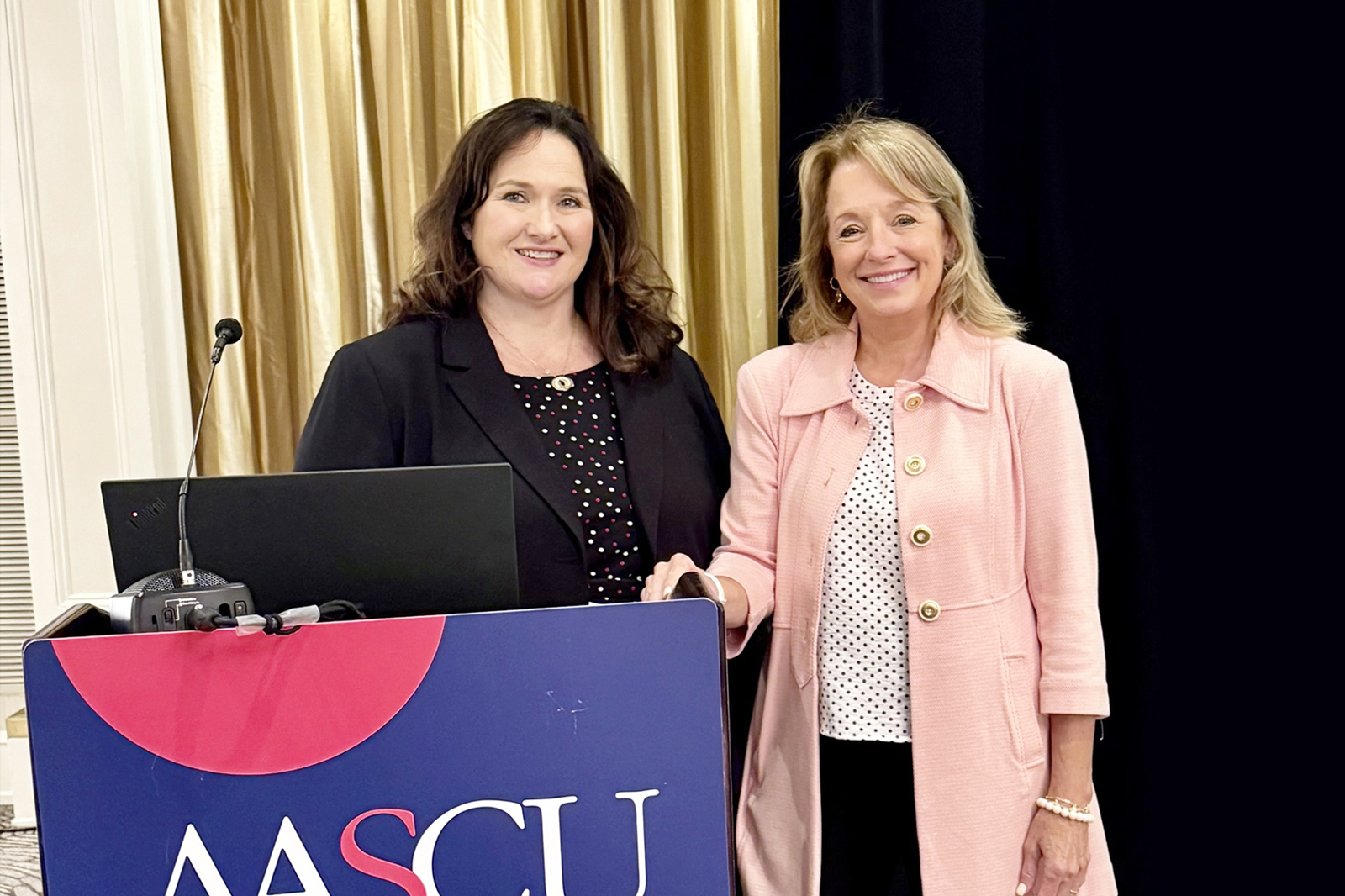
Those challenges formed the backdrop for a conversation at this year’s American Association of State Colleges and Universities (AASCU) Summer Meeting, where Dr. Shelly Blunt, Provost at the University of Southern Indiana (USI), and Susan Dukes, President of University Partnerships at Risepoint, shared lessons from USI’s online graduate growth and discussed what regional universities can learn from the institution’s experience.
The central message from the session was surprisingly simple: Regional universities already have what working adults are looking for.
Working adults continue to value affordability, accessibility, career-aligned programs, and the trust that comes with established institutions that understand their communities and workforce needs. The challenge is not becoming something different. Rather, it is making those strengths more accessible to the learners who need them most.
Pivot to meet market realities
Like many institutions across the United States, USI recognized that relying solely on traditional undergraduate enrollment would not support long-term growth.
Projected declines in high school graduates across Indiana and neighboring states continue to reshape enrollment strategies in the region. At the same time, more working adults are choosing online education and increasingly enrolling at out-of-state institutions, according to fall 2024 NC-SARA data.
In Indiana alone, more than one-third of fully online students now attend institutions outside the state. Many of those students are choosing large national online providers, or “megas,” that have built their models specifically around the needs of working adults.
For USI, the question became clear: if working adults preferred the flexibility of online learning, what is the best way for a regional public university to compete?
Start with mission, not modality
USI’s online expansion began as a response to enrollment pressures but quickly became an institutional strategy.
In 2012, the university increased admissions standards as Indiana moved toward performance-based funding models. While the decision aligned with quality goals, it also created enrollment pressure and accelerated conversations about future growth.
The university’s MBA program offered an early opportunity. Enrollment had begun to decline, and leaders recognized that working adults increasingly preferred online options to evening classes on campus. Rather than viewing online learning as separate from the institution’s mission, USI viewed it as a way to extend that mission to new learners.
As Provost Dr. Shelly Blunt explained during the session: “It wasn’t a College of Business initiative. It was a university initiative.”
Admissions, marketing, the registrar, the bursar, faculty leadership, and institutional administration all had a seat at the table. With transparency as a critical part of the process, town halls, campus meetings, and regular communication helped build trust and maintain alignment across the university.
Work with the willing
Perhaps the most valuable lesson USI shared was one of change management: “Work with the willing, show proof of concept, and then onboard others.”
Some faculty members had questions about quality, academic rigor, and institutional identity. To allay such concerns, USI leaders initially partnered with those faculty members interested in exploring online delivery and focused on demonstrating outcomes.
Over time, the institution saw growing interest from faculty who wanted to participate in online programs and contribute to their growth. Ultimately, what began as an enrollment strategy became a model for institutional change.
Scale quality, not just enrollment
USI also challenged a common assumption that growth and quality exist in tension.
Curriculum ownership remained with faculty. Course design remained intentionally aligned with the university’s mission and accreditation expectations. Faculty teaching online agreed to shared design principles centered on engagement, application, and meaningful student interaction.
The goal was not simply online delivery.
Every course needed to deliver something students could immediately apply to their careers and workplaces. Faculty engagement expectations remained high, and student interaction became a defining feature of the experience rather than an afterthought.
The results have been significant. According to USI exit survey results:
- 96% of MBA students are very satisfied with teaching quality;
- 88% report satisfaction with the individual attention they receive from faculty;
- 50% report receiving promotions or desired job changes following completion of the MBA program.
Regional universities are well positioned to compete for working adults
One of the strongest messages from the session came from Susan Dukes, President of University Partnership at Risepoint: “You already have what students want.”
Working adults continue to value affordability, accessibility, career alignment, and the trust that comes with established regional institutions.
USI’s experience over the past decade suggests online learning does not require institutions to become something different. Instead, it allows them to extend what already makes them valuable to learners who may never have had access otherwise:
- Graduate student interest expanded from 38 states to all 50, plus Canada and Puerto Rico;
- New student enrollments grew from 18 states to 40;
- Graduate students increased from 11% to more than 25% of the university’s total student population;
- USI’s MBA market share in Indiana grew from 1% in 2016 to 18% in 2024 (IPEDS); and
- Its new MBA AI concentration attracted nearly 200 students within its first year.
What other regional universities can learn from USI’s experience
While the details may be unique to USI, the lessons are not:
- Make online growth an institutional strategy, not a single-college initiative.
- Work with the willing and allow proof of concept to build momentum.
- Preserve faculty ownership of curriculum and quality.
- Design programs around the realities of working adults.
- Build on institutional strengths rather than trying to imitate national providers.
Regional public universities do not need to become something different to compete for working adults. USI didn’t try to out-mega the megas. They leaned into what regional public universities already do well: trust, affordability, workforce relevance, and community connection. Online learning simply allows institutions to extend those strengths to more learners in more places.