The needs and characteristics that define today’s learners are rapidly changing. Across the spectrum of U.S. higher education, students defined as nontraditional are anything but – they are now the “new majority,” accounting for an increasing percentage of overall higher education enrollments.
Many more students than ever before are learning online, either for the entirety of their learning experience, or for just a few courses. Institutional leaders wonder – what attributes define today’s online learner? What does this new generation of online learners want from their higher education journey?
The online learner’s motivations, needs, and experiences are different from those that defined the online learner of a decade or more ago. The 2025 Voice of the Online Learner report explored this topic in depth with a survey of online learners. Here are some of the main takeaways.
Online learners are busy, determined, career-oriented trailblazers
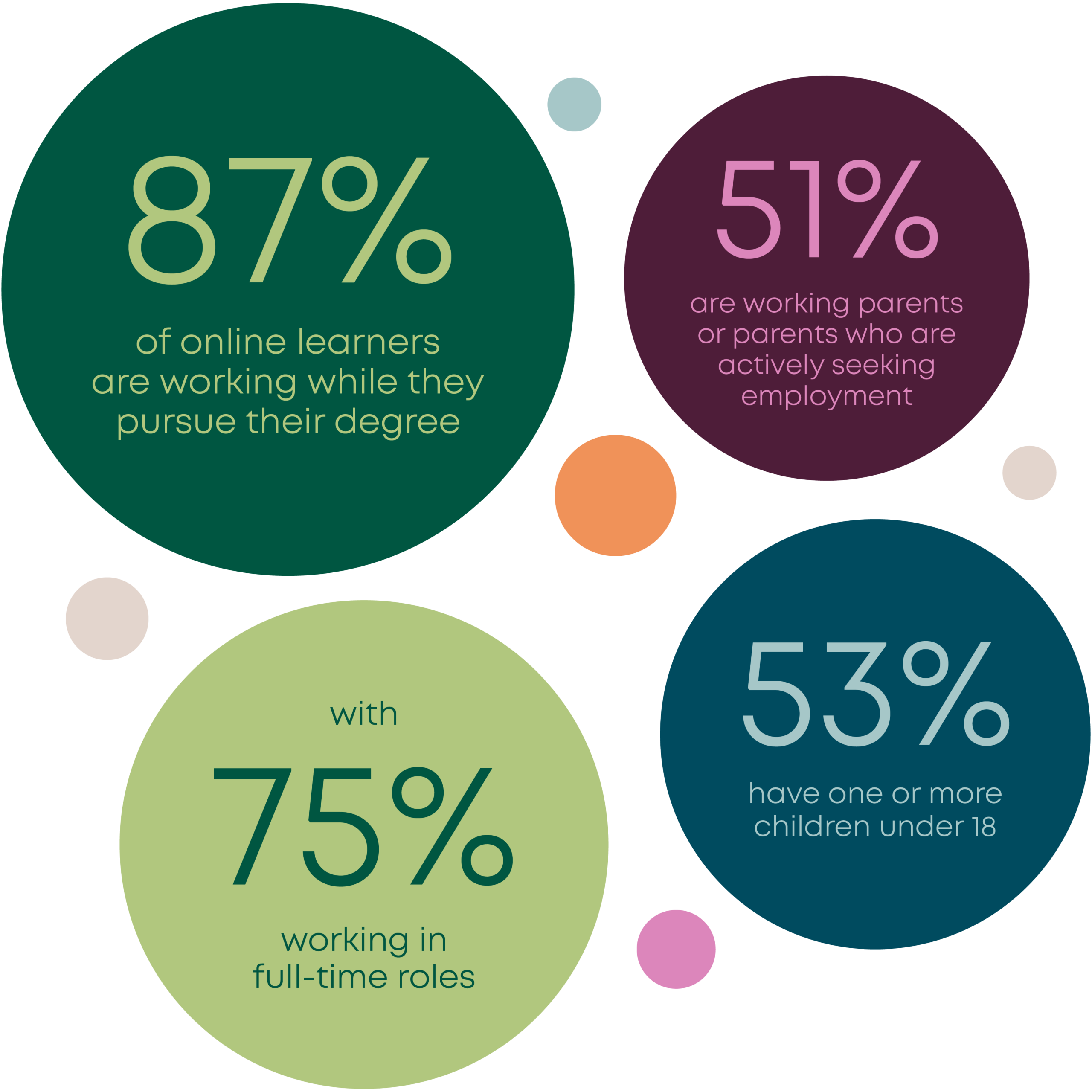
Data shows that online learners are adults who balance their studies with full- or part-time work, care giving, and personal obligations. A closer examination of online learners reveals an even busier and more inspiring learner profile, with over half of students being working parents or parents who are actively seeking employment.
Online learners are determined to achieve personal and career mobility. They recognize that higher education can be the driver to advance their careers.
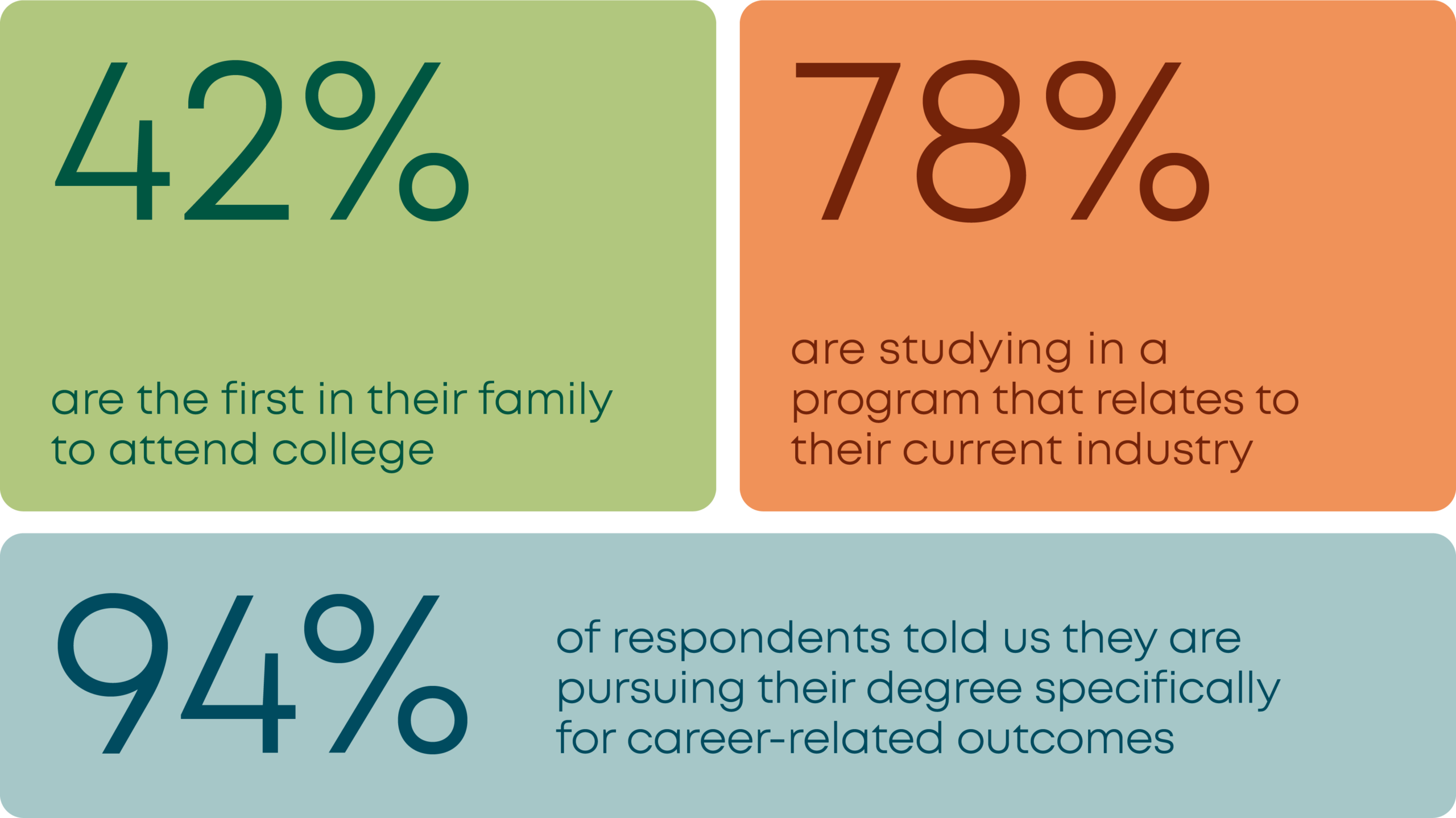
Furthermore, 59% told us they are motivated by career advancement, 51% reported that they are hoping to earn a salary increase, and 44% said they are hoping to gain marketable skills or certifications.
Online learners increasingly want support and connection with their institutions, educators, and peers
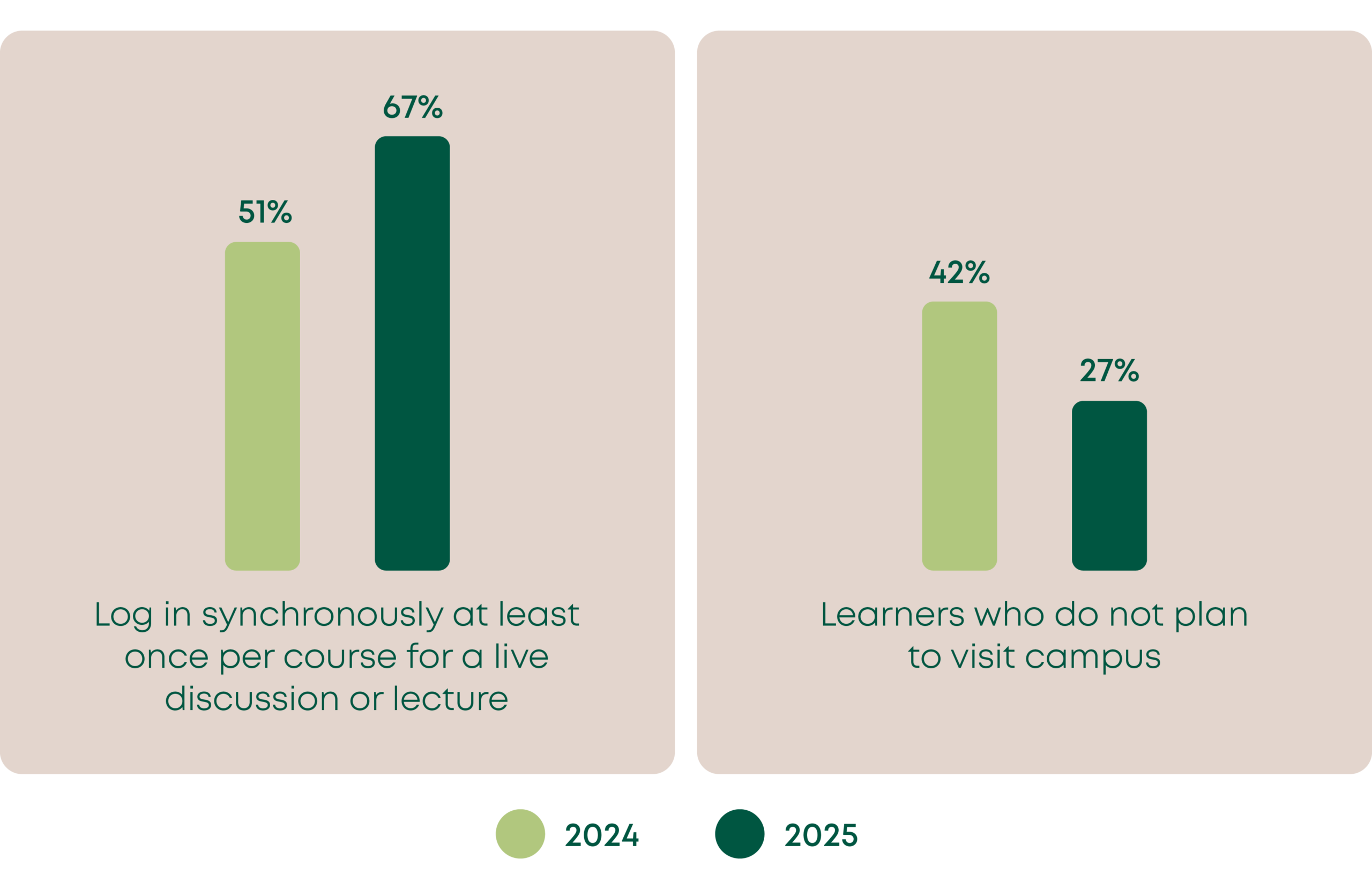
While online learners need and prioritize flexibility in their courses, a growing number actually crave a networked higher education experience with occasional in-person touch points. In fact, 67% of online learners reported that they want to log in synchronously at least once per course for a live discussion or lecture –a sharp rise from the 51% who wanted to do so last year. And, while a 2024 survey revealed that 42% of learners didn’t plan to visit campus, only around a quarter (27%) agreed with that statement this year, meaning 73% of online learners want or plan to visit their campus at some point, either for academic support or for special events like graduation.
Online learners choose online first
Importantly, most online learners want to learn online, and say that online learning wasn’t their second choice. Some eight in 10 respondents told us that they chose the online modality first, before they chose their institution, and 71% said they wouldn’t attend an institution if their desired program wasn’t offered online.

Online learners are also saying, loud and clear, “We are lifelong learners, and we’re not just here for a degree.” Around half (48%) of our online learner respondents, in fact, reported having an interest in future online non-degree programs. Over half (51%) told us they have already participated in non-degree programs, and 56% said they have an interest in pursuing non-degree credentials online – up from 48% in 2024. What might non-degree credentials look like? The most commonly selected options for our respondents were professional certificates (58%), trade skill certifications (44%), and industry certifications (42%).
How to connect with online learners
The days of online learners existing outside the fringe of ‘traditional’ higher education are well and truly gone. Online learners represent a vast demographic of the overall university and postgraduate population. Accordingly, their needs and goals – flexibility, connectedness, and belonging – should be front and center in the strategic plans of the institutions who enroll them. By understanding who online learners are, listening to what they want, and giving them the support they need to be successful, online programs can ensure that they remain attractive places for students to enroll, learn, and excel. Universities that are looking to connect with online learners should nurture their goals, support their needs, and accept that they represent the new normal of higher education.
Gain more insights about modern learners, including their motivators, challenges, and needs, by reading the full Voice of the Online Learner report .