Catholic colleges and universities have long balanced a deeply rooted mission with a call to serve evolving student and community needs. Today, that calling is shaped by enrollment realities, financial stewardship, and a growing population of adult learners seeking education that is both accessible and rooted in purpose.
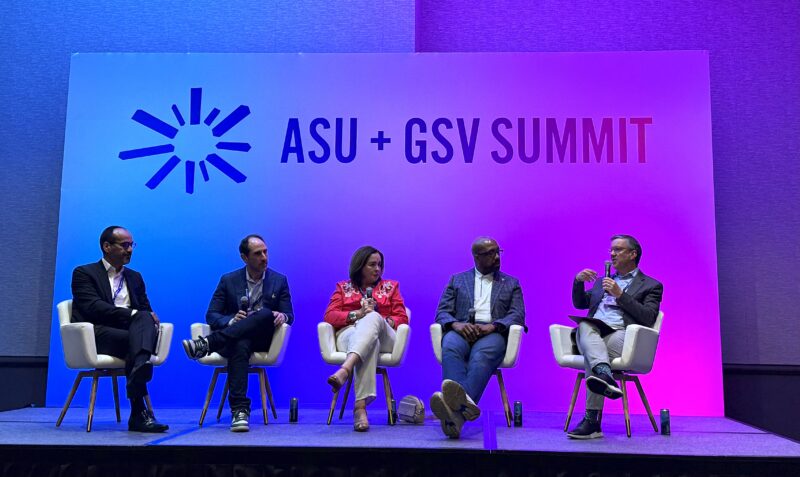
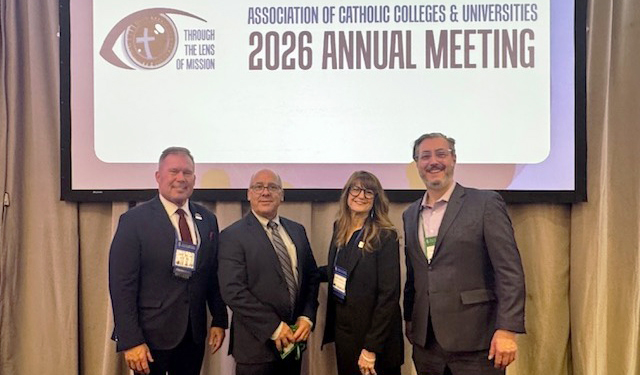
That responsibility was the focus of a session at the Association of Catholic Colleges and Universities (ACCU) Annual Meeting on February 1 in Washington, D.C. In the session, Extending Equitable Access While Advancing Catholic Identity, university leaders explored how innovation can help Catholic institutions expand access while remaining true to who they are.
The panel discussion featured Risepoint partners, Susan Burns, PhD, President of the University of Mount Saint Vincent in the Bronx section of New York City, and David A. Armstrong, JD, President of St. Thomas University in the Miami metropolitan area. They shared how their institutions are using online education and strategic partnerships to widen access, support working adults, and reinforce Catholic identity in meaningful ways.
Viewing online growth as an extension of mission
For both presidents, the decision to expand online learning was not driven by trends or growth for its own sake. It followed careful reflection on mission, and on the students their institutions were uniquely positioned to serve.
In both communities, leaders recognized an increasing number of adult learners balancing work, family, and community responsibilities. Many were first-generation students or individuals who had historically faced barriers to completing a degree.
At Mount Saint Vincent, that realization sharpened as leaders looked closely at who was missing from their student population. The gap pointed to adult and graduate learners seeking a flexible path forward. As Burns explained, “What we knew is that we weren’t serving those adult learners, those graduate learners, who needed an affordable, accessible, excellent education online.”
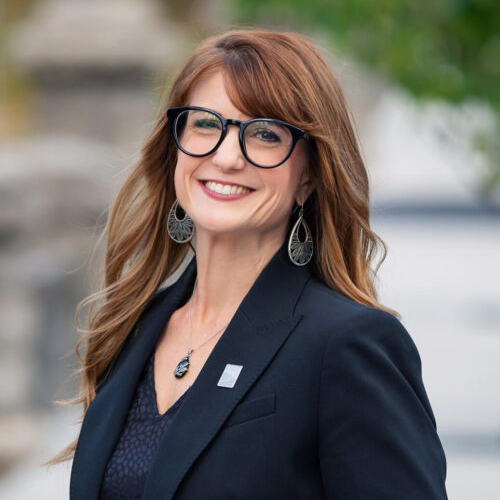
What we knew is that we weren’t serving those adult learners, those graduate learners, who needed an affordable, accessible, excellent education online.
Rather than viewing online education as separate from their core mission, both institutions embraced it as essential to sustaining their Catholic identity and ensuring they could continue to serve learners, including those whose lives no longer fit traditional higher education models.
Building campus cultures that support thoughtful change
As the discussion made clear, innovation is rarely just an operational challenge. It also requires building shared understanding across campus and ensuring faculty and staff see change as an extension of mission rather than as a departure from it.
For Burns, expanding online education was not about shifting priorities, but about staying true to them. “This is not mission creep. This is leaning into mission.”
Burns and Armstrong returned repeatedly to the importance of transparency and trust, particularly in how change is communicated and led. Strategic partnerships played a key role in helping their institutions move forward with confidence, bringing added capacity, expertise, and perspective as programs scaled.
Armstrong described partnerships as essential in moments when resources are constrained and the stakes are high. Rather than viewing external collaborators as transactional service providers at St. Thomas, he framed partnership as a shared commitment to mission, outcomes, and accountability. “We don’t believe in vendors. We only believe in partners.”
Online programs become a proving ground, illustrating how institutions could pair internal leadership with external expertise to support academic rigor, student outcomes, and long-term sustainability.
Designing programs that reflect values and workforce needs
Equitable access, the presidents emphasized, is not only about enrollment. It is about enabling students and their families to move forward with confidence.
That focus shaped St. Thomas’s online nursing and business programs, which are designed around the workforce needs in South Florida. Ethical leadership is intentionally embedded across the curriculum. Armstrong emphasized that program success is measured not just by growth, but by real-world impact. “In the end, all our educational programs have to give a return on investment to the students and their families.”
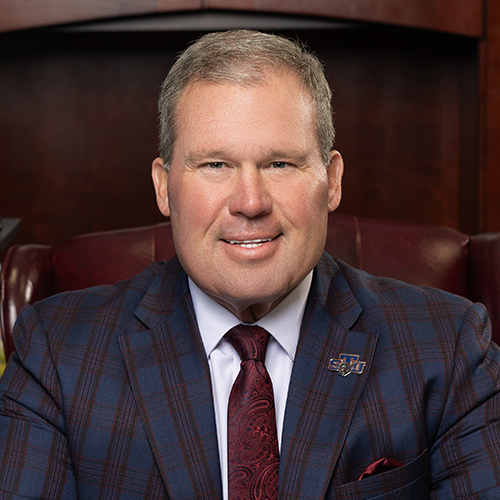
In the end, all our educational programs have to give a return on investment to the students and their families.
A similar approach guides decisions at Mount Saint Vincent, where mission and community context shape which programs they offer in the online modality. That understanding informed a decision to lean heavily on education programs, as New York City experiences chronic teacher shortages. The institution recently learned that 1% of current NYC teachers earned their degree from Mount Saint Vincent, contributing directly to one of the city’s most persistent and vital workforce needs. This would not have been possible without offering the Master of Education degree fully online.
For both institutions, online education is a flexible and intentional pathway designed to meet learners where they are, while maintaining high expectations for quality and outcomes.
Planning for long-term sustainability
As online enrollments grow, so do demands on advising, faculty, and infrastructure. Planning early for scale matters, particularly when institutions want growth to strengthen, rather than strain, the broader campus.
Armstrong described online education as central to St. Thomas’s future direction. “Our online education is a massive part of getting us to that point of achieving our vision.” At Mount Saint Vincent, Burns framed early online success as momentum for broader institutional growth. “Show that you can find that success, and then you can move, then you can roll.”
At these institutions, sustainability and mission are deeply connected. Long-term institutional health makes it possible to continue serving students and communities for generations to come. For Armstrong, the decision to focus on adult learners was shaped by the responsibility to ensure that mission could endure. As he put it, “No margin, no mission.”
Leading with purpose and partnership
Catholic colleges and universities bring a distinctive perspective to higher education, grounded in values, community, and the formation of the whole person.
The experiences shared at ACCU demonstrate that Catholic identity is not a limitation on innovation, but a foundation for it. Armstrong was direct about what that means for institutional leadership today: “If you want to save your institution, lean into your mission as a Catholic university.”
About ACCU
The Association of Catholic Colleges and Universities, founded in 1899, serves as the collective voice of Catholic higher education. Through research, publications, conferences, consultations, and collaborative programs, ACCU supports its member institutions in strengthening Catholic identity, advancing educational excellence, and contributing to the common good.
Risepoint partners with more than a dozen ACCU members, including Univeristy of Mount Saint Vincent and St. Thomas University, to help them expand access and extend their missions. Contact us to learn how we can help you reach your institution’s growth goals.
Meet the author:

Dan Bartell, Vice President, New University Partnerships at Risepoint
Dan helps universities innovate to achieve sustainable growth goals and expand access to education. He’s spent his entire career advancing lasting partnerships that develop workforce-relevant learning opportunities for institutions, students, and employers. He’s particularly focused on solutions for adult learners and is based in Princeton, New Jersey.