Graduate education has always attracted ambitious professionals looking to advance their careers while balancing work and family responsibilities. What is changing is how these learners expect to engage with higher education.
As I discussed in my recent presentation at the Council of Graduate Schools Summer Workshop, today’s online graduate learners are digitally fluent, career-focused, and increasingly self-directed. They expect institutions to deliver flexible experiences, practical guidance around artificial intelligence, and programs that translate directly into career growth.
The findings from the 2026 Voice of the Online Learner: Graduate Edition report suggest these expectations are becoming the new standard. For university leaders, they also point to new opportunities to strengthen enrollment, student support, and workforce alignment.
To expand access, fit graduate programs into real life
Online graduate learners are not simply students. They are professionals, parents, caregivers, and community members pursuing education alongside full lives.
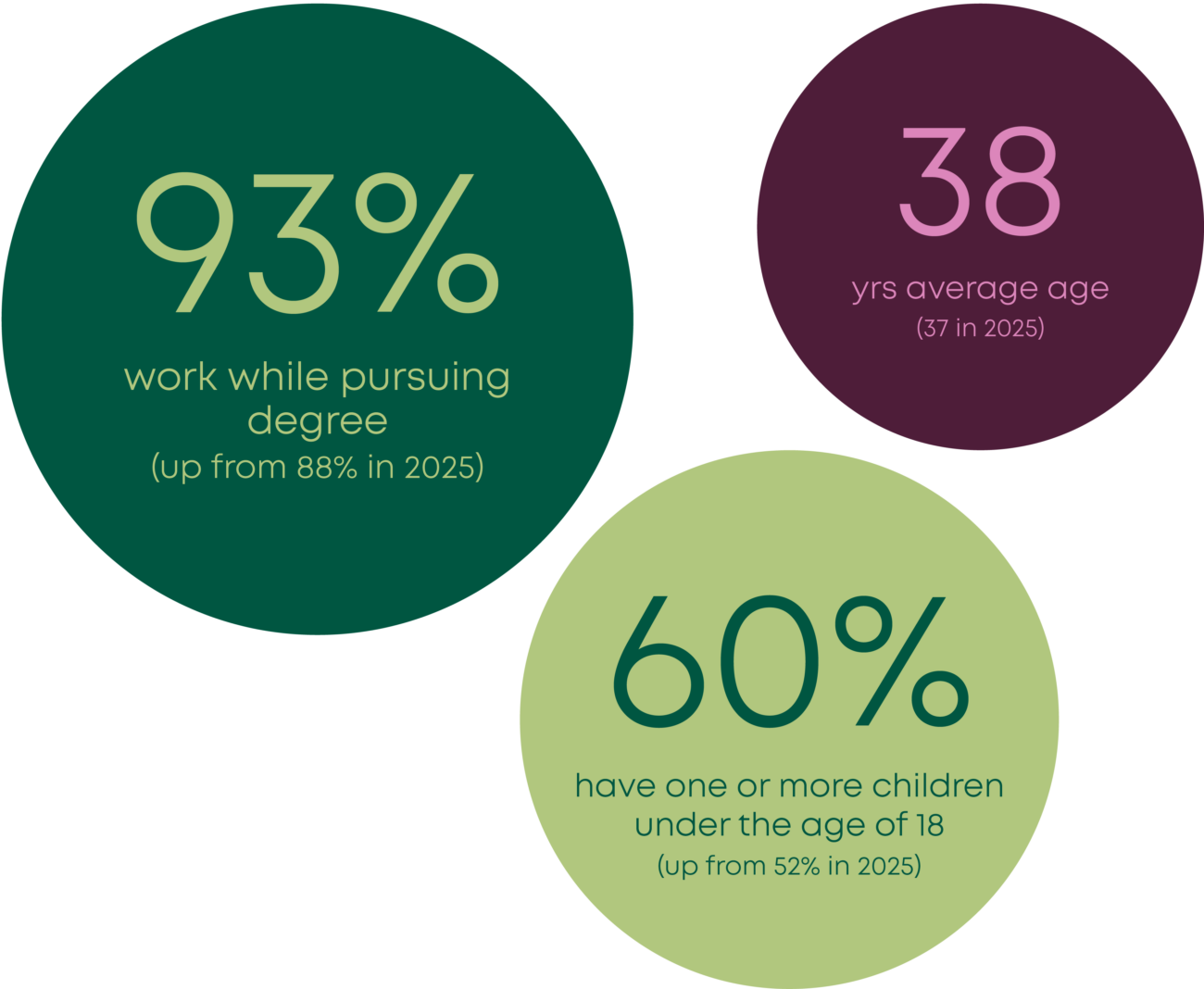
Ninety-three percent work while earning their degree, up from 88% just one year ago. The average learner is 38 years old and 60% have children under the age of 18.
Career advancement remains their primary motivation. Nearly all graduate learners (96%) say they are pursuing a degree for career-related outcomes, while 82% are studying in a field connected to their current profession.
Together, these findings reinforce an important reality for graduate education. Flexibility is no longer a differentiator. It is an expectation. Institutions that remove barriers across the learner journey, from program discovery through graduation, will be better positioned to attract, support, and retain today’s working adults.

Build flexible discovery journeys
Graduate learners are changing how they discover programs.
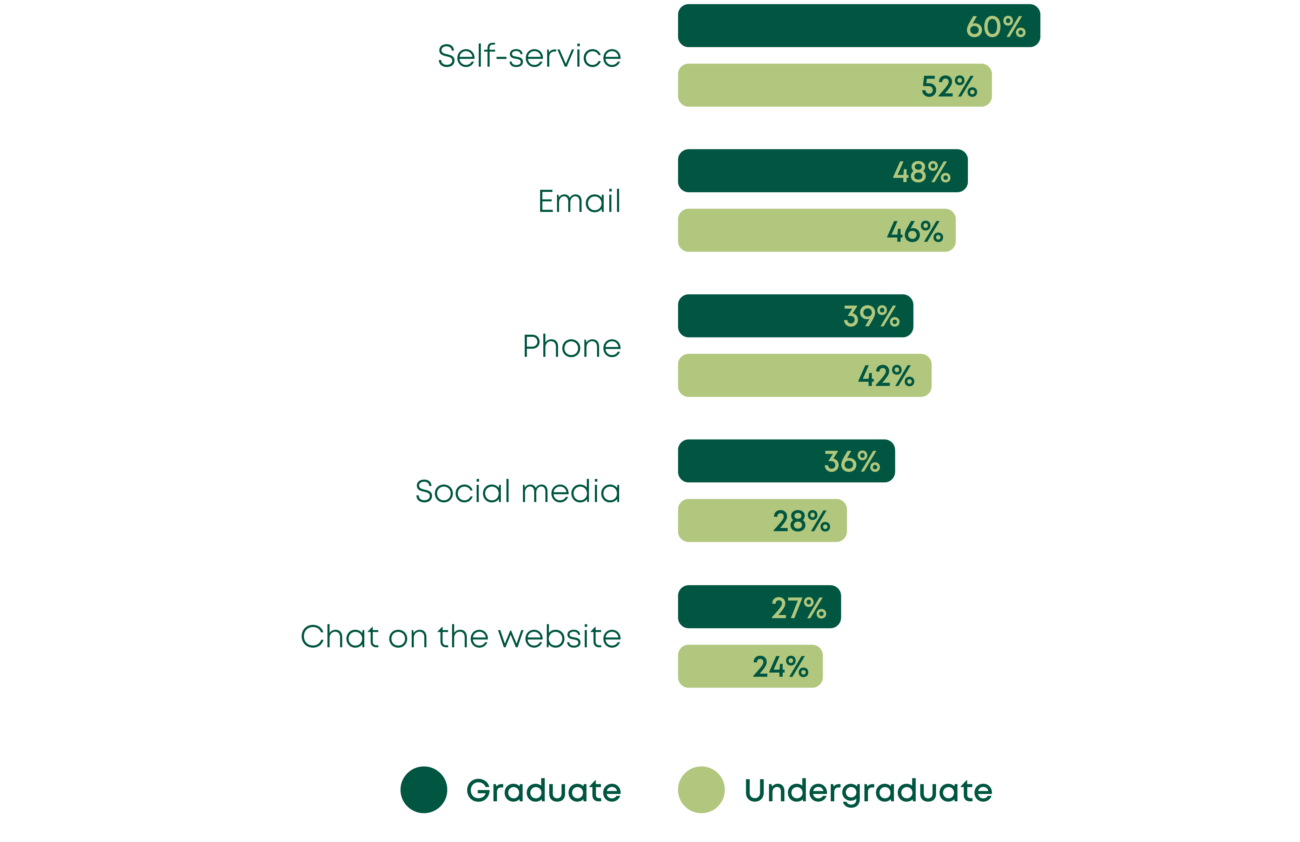
Compared with undergraduate learners, they are more likely to rely on self-service resources, website chat, email, and other digital tools while researching institutions. They want to gather information on their own schedule, compare options independently, and engage with a university when they are ready.
For graduate enrollment and marketing leaders, this reinforces the importance of flexible discovery journeys. Institutions should ensure information is easy to find across digital channels while making human support available when learners are ready to engage.
Top discovery methods:
Incorporate AI guidance into graduate courses
The survey findings also point out a separate shift in learner expectations. Graduate learners increasingly view AI literacy as an essential part of their education.
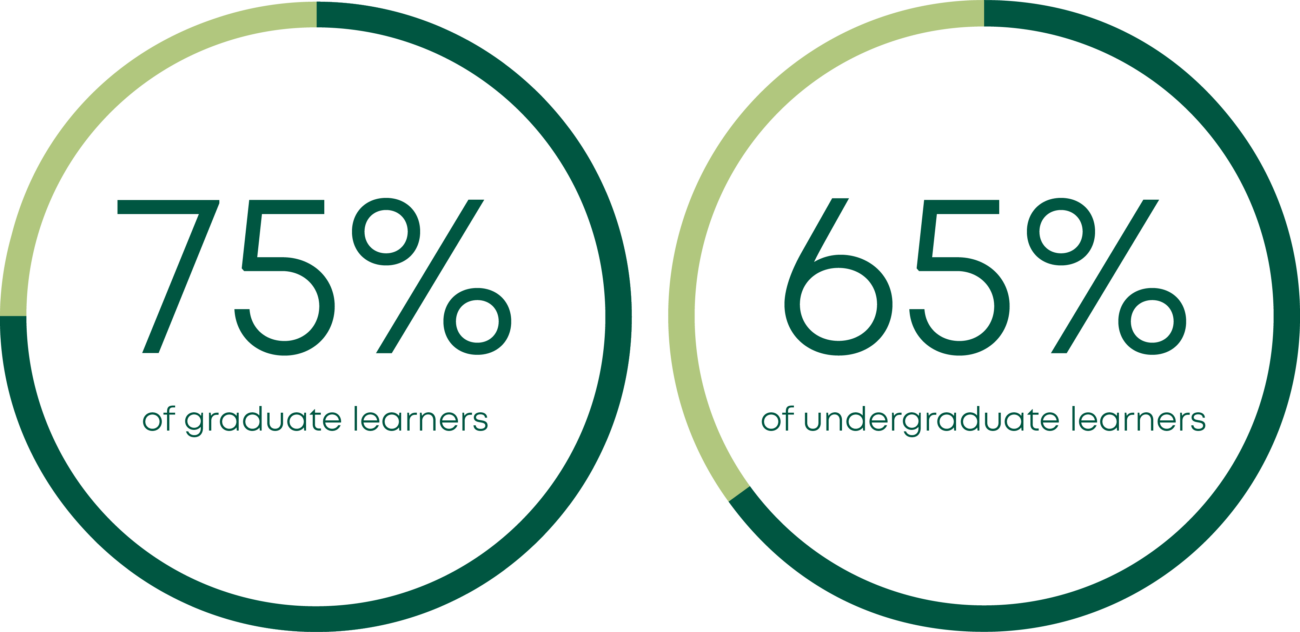
Seventy-five percent believe generative AI will be important to learn and understand to be successful in the workplace (compared to 65% of undergraduates).
This expectation extends beyond access to AI tools. Graduate learners want their institutions to help them understand how AI is reshaping their professions and how to use it responsibly in academic and workplace settings.
Graduate students want guidance, not just AI tools
One of the clearest messages from this year’s research is that graduate learners are looking for clarity as much as technology. They want:
- Guidance on using AI responsibly and ethically;
- Clear institutional policies that define when AI use is appropriate;
- Examples of how AI is transforming their professions and practical ways to use it more effectively in the workplace.
Institutions are racing to prepare learners for an AI-enabled world. This year, substantially more graduate learners report that faculty are discussing appropriate AI use in coursework and integrating AI into the curriculum than in 2025. Yet universities need to move faster. Graduate learners increasingly expect standards on responsible AI use and real-world applications in their professions.
Graduate programs have an opportunity to move beyond simply introducing AI tools and instead help students develop the judgment, critical thinking, and professional confidence needed to apply AI effectively in an evolving workplace.

Reinforce local brand and optional connection
Unsurprisingly, flexibility continues to drive enrollment decisions.
Sixty-three percent of graduate learners say the ability to learn wherever they are is one of the primary reasons they chose an online program.
At the same time, learners continue to seek optional opportunities for connection. Eighty-one percent say they would like to visit campus at some point during their educational journey, even while preferring the flexibility of online coursework.
These findings reinforce an important point for university leaders. Online doesn’t diminish the importance of place. It expands its value. Working adults are intentionally choosing online learning, but they continue to value the trust, support services, and optional in-person engagement that local institutions provide. For regional public universities, this presents a distinct advantage. Their deep ties to local employers and communities position them as trusted anchors for graduate learners seeking both flexibility and meaningful connection.

Future-proof graduate programs
Graduate learners continue to raise the bar for what they expect from higher education.
They are looking for programs that fit their lives, prepare them for an evolving workforce, and help them navigate technologies that are reshaping every profession.
For graduate leaders, the opportunity extends beyond expanding online offerings. It is about designing experiences that are flexible, career-aligned, and responsive to the changing needs of today’s learners.
Institutions that embrace that opportunity will be well positioned to serve the next generation of graduate students while strengthening the workforce and communities they support.
Explore the full report to learn more.
Meet the author:

Kerry Scott Pokorny, Vice President of Research & Insights
Kerry Scott Pokorny is the Vice President of Research & Insights at Risepoint, where she leads efforts to uncover what today’s adult learner needs and how universities can better serve them. With over 20 years of experience in strategy, marketing, and customer insights, Kerry brings a deeply analytical perspective to the higher education landscape.